Blog / Inspection Tips

Check These 7 Things Before You Get Your Car Inspected

Mopar Oil Change
If you have to get your vehicle inspected, you're going to want to be sure it will pass. Here are seven things you can check before heading to the inspection station to improve your chances of passing.

1. Check Your Lights

Check all your lights. This is a simple thing to do, and something you can take care of yourself in many cases. Have someone stand outside and watch while you toggle on and off your headlights, taillights, brake lights, and work the turn signals. Don't forget to check the high-beams either. If you have a light out, in many cases the fix is a simple one. You can pick up a bulb at any auto parts store or car dealership. Many auto parts stores offer to install these at no charge too. Putting them in is usually pretty simple, though, if you can't get help. Check your manual for instructions.

2. Get a Tune-Up and an Oil Change

Emissions are also a part of your inspection and, if it's been a while since your last tune-up, now is a good time to get one. This will usually improve your vehicle's emissions and will certainly improve your vehicle's performance and fuel economy.

3. Insurance and Registration

You cannot get an inspection sticker without proof of insurance. Make sure your insurance card is current and with you when you get your inspection. Make sure your registration is valid too. This may seem silly, but people often forget to renew their vehicle registration. Taking in an expired registration is an automatic failure.

4. Check Your Windshield

Your windshield needs to be free of cracks and chips in order to pass inspection. Make sure you take a close look before bringing your car in. If there are any chips or cracks, contact your insurance company. Many companies have free replacement, and the repair can easily be done at your home or office.

5. Tires

Make sure your tires are in good condition. This may be hard to tell for some people. Signs that your tires are old and worn include flat areas, usually around the edges, and you might also see the steel belts showing through these worn areas. Don't ignore your spare tire either, the inspector won't, and it would be a shame to fail an inspection on an item you may not ever need.

6. Seat Belts

Another item people may not think of is the functionality of your car's seat belts. An inspector will make sure that they are all readily accessible and functioning properly before passing you. If you have a trouble seat belt that slips beneath the seat or one that doesn't clip properly, be sure to get it fixed beforehand.

7. Steering and Alignment

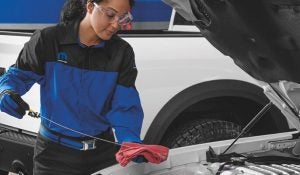
The inspector will test your steering system to be certain it works properly. Many times the culprit to a failure here is worn out components in your front end, like ball joints and shock absorbers. Be sure you have your steering checked as part of your regular maintenance so you can avoid problems at inspection time. You don't want to fail an inspection. If you check these things before you go, you're more likely to pass. For help getting your vehicle ready to pass an inspection, check out the great Service Department at The Jeep Store.   Image via mopar.com
Posted in:

Related Posts

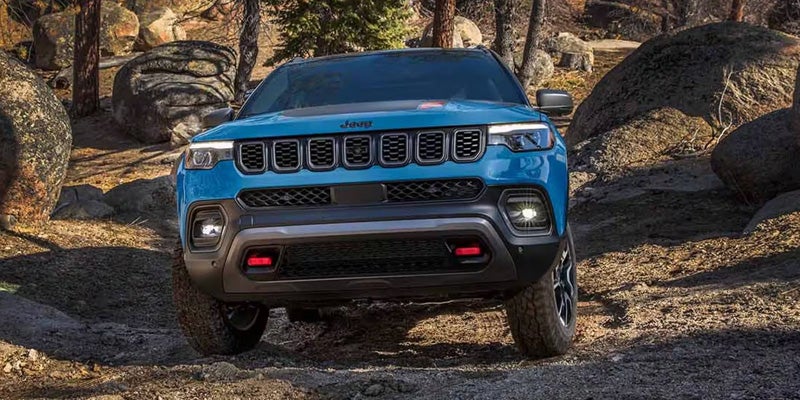
Jeep Compass Trailhawk navigating rocky off-road terrain

2026 Jeep Compass: Compact Dimensions with Proper 4x4 Hardware

The 2026 Jeep Compass is here and gives you standard 4x4 capability, 200 hp, up to 31 mpg highway on select configurations, and nearly 60 cubic feet of maximum cargo space. For drivers around Ocean Township, NJ, it makes an interesting case as a smaller SUV designed for weekday journeys and winter weather alike. You get something manageable enough for commuting and parking without giving up the extra traction that becomes important when conditions deteriorate. Two Hundred Horsepower Is Plenty for the Brief Every 2026 Compass produces 200 hp and 221 lbs. ft. of torque, giving it best-in-class standard hp and torque figures. Those numbers are significant in a compact SUV because this isn't a vehicle expected to tow enormous trailers or carry half a building site. More commonly, the Compass will be joining fast-moving traffic, navigating town and covering longer motorway journeys. The combination of compact dimensions and healthy torque output should suit that role well, while the 4x4 system adds another layer of capability when the road surface becomes less cooperative. Four-Wheel Drive Makes Sense in a New Jersey Winter Ocean Township drivers don't need an explanation of what cold weather can do to road conditions. The Compass's 4x4 capability provides additional traction when rain, snow or slippery surfaces arrive. Trailhawk pushes the concept further with standard Falken WILDPEAK All-Terrain tires for more challenging surfaces. That's an important distinction. Plenty of compact SUVs offer all-wheel traction primarily as reassurance for poor weather, while Jeep also gives buyers a configuration aimed more directly at driving beyond ordinary paved roads. Four Driven Wheels Don't Ruin the Fuel-Economy Story Extra traction can bring an efficiency penalty, so the Compass's ability to achieve up to 31 mpg highway on select configurations deserves attention. That's particularly relevant for owners covering substantial highway mileage during commuting or family travel. Of course, real fuel consumption will depend on configuration, conditions and driving habits, but the official highway figure shows that choosing a compact Jeep with 4x4 capability doesn't automatically mean accepting full-size-SUV fuel consumption. Nearly 60 Cubic Feet Hides Behind the Front Seats Compact exterior dimensions inevitably create questions about carrying capacity. Fold the rear seats and the Compass provides up to 59.8 cubic feet of cargo space, enough to give it considerably more flexibility than its footprint might suggest. An available foot-activated hands-free power liftgate can make loading easier when both hands are occupied. Inside, available leatherette seating with blue accent stitching brings a more distinctive finish, while an available panoramic sunroof gives the cabin a more open feel. Sliding sun visors with illuminated mirrors are a smaller detail, but they're exactly the sort of feature owners interact with far more often than some headline-grabbing technology. The Screens Are Large Without Taking Over the Cabin An available 10.1-inch Uconnect® touchscreen provides access to infotainment functions and supports Apple CarPlay® and Android Auto™ compatibility. An available 10.25-inch Digital Cluster Display puts customizable driving information directly ahead of the driver. The available Alpine® Premium Audio System caters to buyers wanting an upgraded sound system, while the available Active Driving Assist System adds driver-assistance technology. It's a modern technology package, but the Compass still leaves room for the things that define the vehicle more clearly: compact dimensions, cargo capacity and 4x4 hardware. A Smaller SUV With More Than Commuting in Mind The 2026 Jeep Compass occupies an interesting position for Ocean Township drivers. Its 200 hp and 221 lbs. ft. of torque provide a strong performance baseline, while standard 4x4 capability, available Trailhawk equipment and up to 59.8 cubic feet of cargo room broaden what it can handle beyond commuting. Drivers can explore the new Jeep inventory at The Jeep Store, compare available Compass trims and equipment, and schedule a test drive online to find the configuration that best matches their driving.

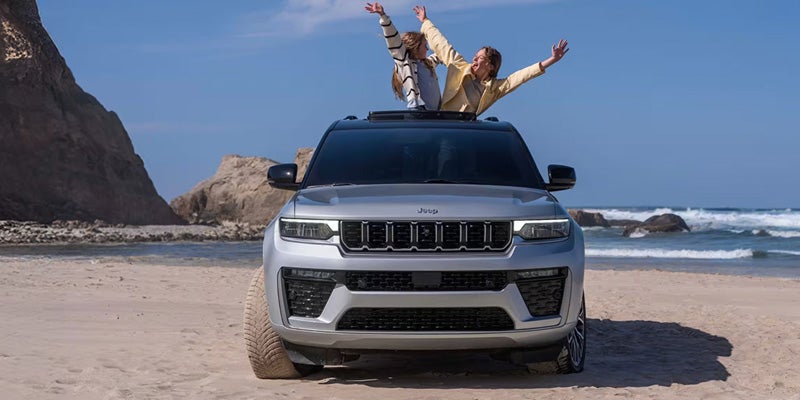
Jeep Grand Cherokee parked on beach with ocean backdrop

2026 Jeep® Grand Cherokee: Start with How Much SUV Your Family Needs

The refreshed 2026 Jeep® Grand Cherokee gives families an important choice before getting into engines, screens, or option packages: 2 rows or 3? The standard Grand Cherokee seats up to 5, while the Grand Cherokee L expands capacity to as many as 7 passengers and provides additional cargo space. Add available 4x4, up to 6,200 lbs. of towing capability, and a new 12.3-inch Uconnect® touchscreen, and families around Ocean Township, NJ, can configure this SUV around the people and equipment they carry instead of buying more vehicle than they need. Two Rows and Three Rows Solve Different Problems The 2-row Grand Cherokee provides 37.7 cu. ft. of cargo room behind its second row and 70.8 cu. ft. with those seats folded. That's plenty of flexibility for a family of 5 that prioritizes cargo room without needing a third row. The Grand Cherokee L is the answer when passenger capacity takes priority, seating up to 7 and offering 17.2 cu. ft. behind the third row. Fold that row and capacity expands to 46.9 cu. ft.; folding the second and third rows opens 84.6 cu. ft. Families can also configure Grand Cherokee L with second-row captain's chairs or a bench seat, making the seating arrangement another part of the decision. Both Engines Can Reach the Same Tow Rating The available 2.0L Hurricane 4 Turbo is new for the 2026 refresh, producing 324 hp and 332 lbs. ft. of torque and pairing with Jeep's new Gen IV automatic transmission. Properly equipped, it can tow up to 6,200 lbs. The 3.6L Pentastar® V6 produces 293 hp and can also provide up to 6,200 lbs. of available towing capability. That gives families capacity for compatible boats, campers, and recreational trailers, although the specific vehicle's configuration, payload, passengers, cargo, and trailer weight still need to be considered before hitching up. Four-Wheel Drive Adds Hardware, Not Just a Badge Available 4x4 broadens what the Grand Cherokee can handle when weather deteriorates or pavement ends. Jeep offers Quadra-Trac I® and Quadra-Drive® II systems, with Quadra-Drive® II adding a rear electronic limited-slip differential. Available Selec-Terrain® provides Auto, Sport, Rock, Snow, and Mud/Sand modes to adjust vehicle behavior for different surfaces. Available Quadra-Lift® air suspension can raise the SUV for additional ground clearance, giving the Grand Cherokee more capability when a family trip involves rough access roads, snow, or uneven terrain. The 2026 Cabin Gets a Bigger Digital Centerpiece A new 12.3-inch Uconnect® touchscreen anchors the refreshed dashboard, with wireless Apple CarPlay® and Android Auto™ compatibility handling smartphone integration. Available wireless charging helps keep the console from becoming a nest of charging cables. Higher configurations can add a Front Passenger Interactive Display, Head-Up Display, 360-Degree Surround View Camera, and Night Vision Camera. The available Night Vision system can detect pedestrians and animals up to 328 feet ahead, extending the driver's awareness beyond what the headlights alone may reveal. Family Technology Extends Beyond the Touchscreen Grand Cherokee offers Adaptive Cruise Control with Stop and Go, Blind Spot Monitoring with Rear Cross Path Detection, Full-Speed Forward Collision Warning with pedestrian and cyclist detection, and Active Lane Management. Available Active Driving Assist can help manage speed and lane position on compatible roads, while available Drowsy Driver Detection monitors driving behavior for signs associated with fatigue. Longer trips can also be made more comfortable with available heated and ventilated front seats, a dual-pane panoramic sunroof, and 16-way power-adjustable front seats with available memory and massage functionality. Compare Grand Cherokee Configurations at The Jeep Store Ocean Township, NJ, families can visit The Jeep Store to browse new Grand Cherokee inventory, compare 2-row and Grand Cherokee L configurations, explore available 4x4 systems and engines, review towing capability, value a trade-in, explore financing options, and schedule a test drive.

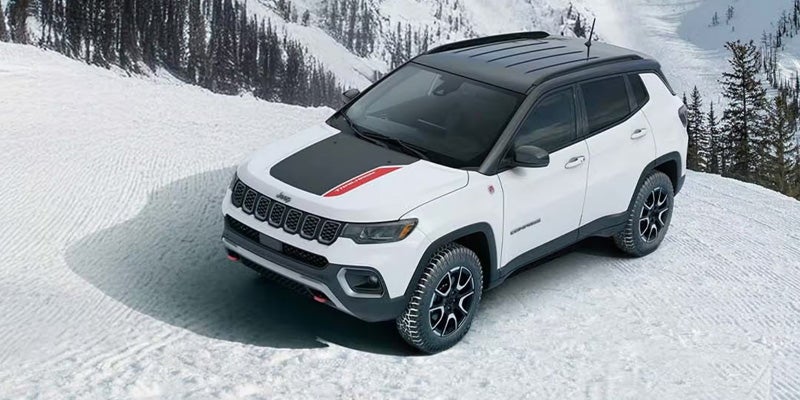
Jeep driving on snowy mountain terrain

Jeep Winter Driving: How to Prepare for Fall and Winter in New Jersey

New Jersey winters can be unpredictable. One day you're dealing with a wet fall morning on the Garden State Parkway, and the next, you're worried about black ice or driving through several inches of snow. For drivers in Ocean Township, NJ, Jeep winter driving starts with making sure your vehicle is truly ready for the season. Understanding Your Jeep's 4x4 System One of the biggest advantages Jeep owners have in winter is access to capable four-wheel drive systems. Models like the Wrangler, Grand Cherokee, and Gladiator come equipped with systems designed to deliver traction across slick and uneven surfaces. Knowing how and when to engage your 4x4 mode is important. Most systems offer settings for different conditions, from light snow to off-road terrain. It’s important to remember that four-wheel drive helps you accelerate and maintain grip - it does not shorten your stopping distance. It’s a tool, not a substitute for cautious driving. Always reduce your speed and increase your following distance in winter conditions. Tires: Your First Line of Defense in Snow and Ice All-season tires perform reasonably well in mild winter conditions, but if you frequently encounter snow and ice, consider getting winter tires. They use a softer rubber compound and unique tread patterns designed to grip in cold temperatures. Check your current tires for tread depth before the season begins. A worn tire on a snowy road is a serious safety risk, regardless of your drivetrain. Tire pressure also drops as temperatures fall - roughly one pound per square inch for every 10-degree drop in temperature. Check your pressure regularly throughout the season and keep it at the recommended level. Battery, Brakes, and Fluids to Check Before It Gets Cold Cold weather is hard on batteries. If your battery is more than three years old, have it tested before winter. A battery that struggles in mild weather will likely fail when temperatures dip below freezing. While you're under the hood, check your coolant level and make sure the antifreeze mixture is appropriate for winter temperatures. Brake inspections are just as critical. Worn brake pads and rotors are a hazard on slippery roads. Have a technician assess your brake system and replace anything that's close to the end of its service life. Also check your windshield washer fluid and make sure you're using a formula rated for freezing temperatures. Wiper Blades and Visibility in Winter Weather Good visibility is crucial during winter. Wiper blades degrade over time, and blades that skip or streak in the rain will perform even worse in sleet and snow. Replace them before the season starts and consider switching to winter-specific blades designed to handle ice buildup. Keep your defroster working properly and clear all snow and ice from your windows, mirrors, and roof before driving. Safe Driving Habits for Snow and Ice Conditions Even with a well-prepared Jeep and a capable 4x4 system, winter roads demand your full attention. Slow down well ahead of intersections and avoid swerving or sudden turns. Accelerate gently from a stop and brake earlier than you think you need to. Allow for extra travel time and check road conditions before you leave. Remember that bridges and overpasses freeze before road surfaces, and shaded areas can hold ice long after sunnier stretches have cleared. Schedule Your Winter Service at The Jeep Store Getting your Jeep ready for winter does not have to be complicated. The team at The Jeep Store can walk you through a full seasonal inspection, covering your tires, battery, brakes, fluids, and wipers so you're confident heading into the colder months. Drivers throughout Ocean Township, NJ, trust us to keep their vehicles performing at their best all year long. Visit us online at thejeepstore.com to schedule your seasonal inspection and make sure your Jeeps is ready for winter.